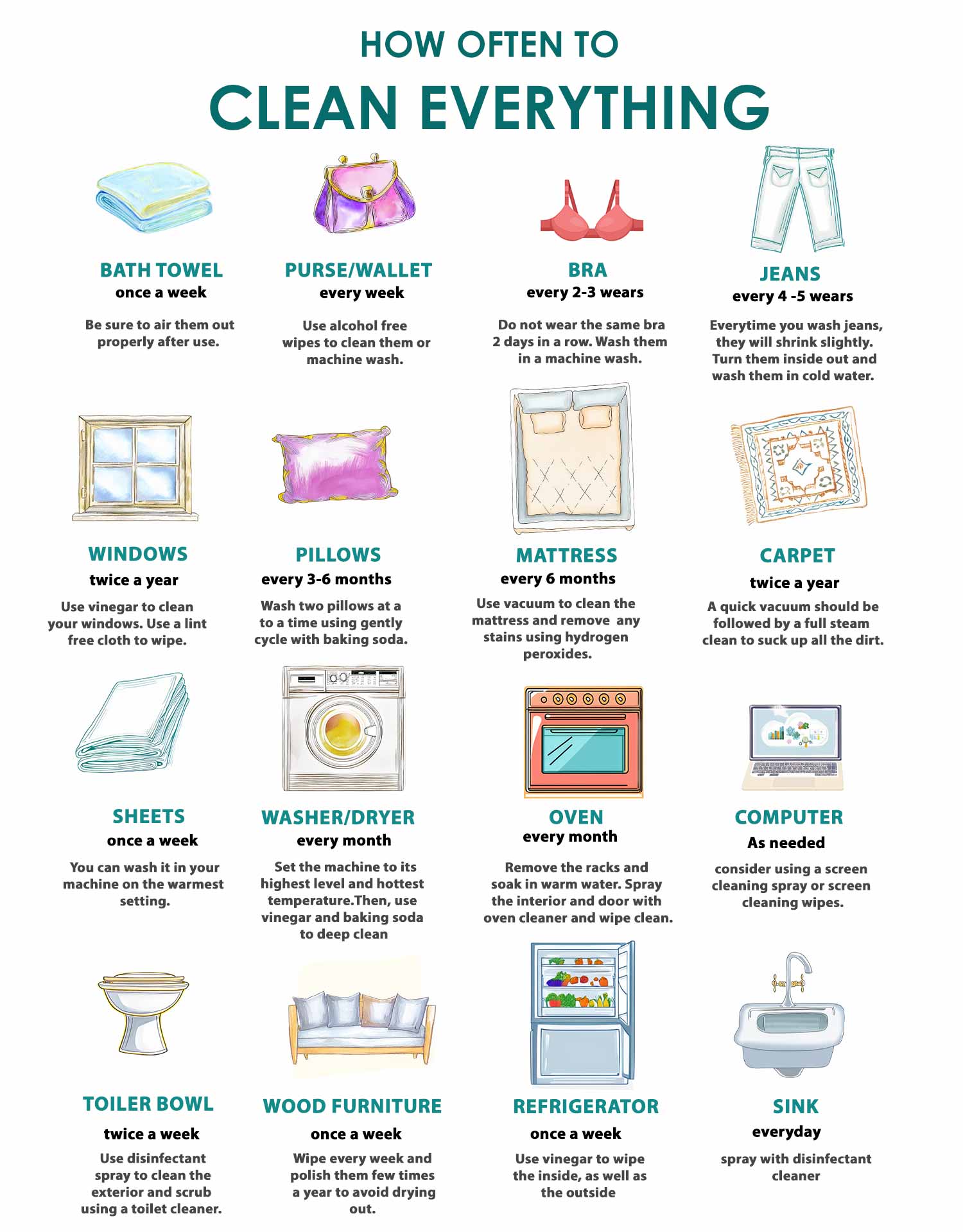
You can keep every room fresh without spending your entire weekend doing laundry. Most items in your home need less washing than you think, but a few key things require weekly attention. Here is the exact schedule for how often to wash everything in your home so you can stop guessing and stay on track.
Bedding schedule: sheets, pillows, and blankets
Your bed sheets collect skin cells, body oils, and dust every night. Strip your bed and wash all sheets, pillowcases, and duvet covers once every seven days. Use warm water and your normal detergent to keep the fabric fresh and clean. If you have pets that sleep on the mattress, shorten this window to every four days.
Thicker bedding items do not need weekly care. Wash these items on a relaxed schedule so you do not wear out the fabrics too quickly:
- Pillows: Wash every three months in warm water, putting two pillows in the machine at once to keep the wash cycle balanced.
- Blankets and throws: Wash once every four weeks on a gentle cycle.
- Duvet inserts and comforters: Wash every six months, ideally at the start of spring and autumn.
- Mattress protectors: Wash every four weeks along with your normal sheet load.

Bathroom linen schedule: towels, mats, and curtains
Bath towels hold moisture and grow bacteria quickly in a warm room. Hang your towel on a wide bar after every shower so it can air out fully. Wash bath towels after three uses, which usually means twice a week for a standard household. Wash hand towels every two days because multiple people use them throughout the day.
Floor mats and shower curtains catch water splashes, soap scum, and stray hair. Treat these items with a strict routine to keep your bathroom smelling fresh:
- Bath mats: Wash once a week in hot water and tumble dry on medium heat.
- Fabric shower liners: Wash every two weeks with your bath mats to clear away soap build-up.
- Plastic shower liners: Wipe down every month or wash on a delicate cold cycle with two bath towels to scrub the plastic clean.
Kitchen textiles and high-touch fabrics
Kitchen towels handle raw food residue, wet hands, and clean dishes. Swap out your kitchen towels every single day, or instantly if you use one to wipe up spilled meat juices. Throw them in a hot wash cycle at the end of the week. Sponge wipes and dishcloths hold odor fast, so soak them in boiling water daily and replace them every two weeks.
Living room fabrics also catch dust and daily grime. Couch covers, cloth napkins, and table runners need attention based on direct use. Wash cloth napkins after every meal. Wash removable couch slipcovers every three months. Vacuum cloth sofas every fortnight using the upholstery attachment on your machine to pull out dust and food crumbs.
Curtains, rugs, and seasonal home soft goods
Window curtains act as giant filters for indoor dust and outdoor pollen. Dust them with a long-handled duster every two weeks so dirt does not settle into the weave. Take down your fabric curtains and wash them every six months according to the care label. If your curtains are dry-clean only, hang them outside on a clothesline for four hours to air out twice a year.
Soft area rugs and bath runners require standard maintenance to keep their shape and fiber strength. Regular cleaning keeps small dirt particles from cutting into the rug backing over time. Vacuum your area rugs twice a week to remove surface grit. Spot clean spills immediately with cold water and a drop of dish soap. Take small washable throw rugs to the machine every four weeks, and professional clean your large area rugs once every two years.
How to create a simple home washing routine
Trying to wash everything in one single weekend creates stress and leaves laundry piles in every room. Group your washing tasks by day instead of doing one massive chore day. Assign sheets to Monday morning, towels to Thursday afternoon, and small kitchen cloths to your regular daily load. Good housekeeping is built on small, regular habits rather than long clean-up days.
Keep your supplies organized next to your machine so you can start a load in thirty seconds. Put detergent, stain spray, and wash bags on an eye-level shelf. Set a timer on your phone for forty-five minutes when you start a load so you do not forget wet clothes in the drum. Shift the wet load directly to the dryer or drying rack as soon as the chime rings to keep fabrics smelling crisp.
Comments
Post a Comment